
Pregnancy Pillow for Back Pain: What Actually Works
Not all pregnancy pillows help with back pain. Here's what causes pregnancy back pain during sleep, which pillow types actually address it, and what to look for before you buy.

Pregnancy back pain is one of the most searched pregnancy sleep topics in Australia, and for good reason. Lower back pain affects around two thirds of pregnant women at some point across the second and third trimesters, and it is consistently worse at night — when the combination of sustained side lying, a growing bump, and loosened pelvic joints creates the conditions for pain to build and disrupt sleep.
A pregnancy pillow for back pain can make a significant difference. But only if it targets the right mechanism. Many women try a pregnancy pillow, find minimal improvement, and conclude that pillows don't help — when the actual problem was choosing the wrong type or positioning it incorrectly. This guide covers what causes pregnancy back pain during sleep, which pregnancy pillows actually help, and exactly what to look for.
What causes back pain during pregnancy sleep
Understanding the cause of pregnancy back pain makes choosing the right pillow considerably more straightforward.
The downward pull of the bump. As your bump grows through the second and third trimesters, its weight creates a downward pull when you lie on your side. Your bump drops toward the mattress while your spine stays in position, creating a torsional force across the lower back that builds over the course of an hour. This is the most common driver of pregnancy lower back pain at night and the one most directly addressed by the right pillow.
Relaxin and joint instability. The hormone relaxin loosens the ligaments and joints throughout the pelvis and lower back during pregnancy. This is necessary for birth preparation but creates instability that the surrounding muscles must compensate for constantly — including during sleep. When your sleep position doesn't support good spinal alignment, those muscles work harder through the night and produce the stiffness and aching that many pregnant women wake with.
Poor spinal alignment during side lying. Side sleeping without proper support allows your spine to sag out of neutral alignment. Your top hip drops forward, your lower back rotates, and the muscles and connective tissue supporting your spine spend the night in a mechanically disadvantaged position. Over several hours, this produces the deep lower back ache that wakes many pregnant women in the early hours.
Hip and pelvic tension referring to the lower back. Hip and lower back pain are closely connected during pregnancy. When your top hip drops forward without knee support, the rotation it creates pulls on the sacroiliac joints and lower back muscles simultaneously. Many women who describe lower back pain at night are actually experiencing referred discomfort from hip misalignment rather than a primary spinal issue.
What type of pregnancy pillow actually helps back pain
Not all pregnancy pillows are equally effective for back pain. The type you choose and how you position it determines whether you get meaningful relief.
For lower back pain caused by bump weight: a bump wedge
The most targeted solution for the downward pull of the bump is a firm wedge positioned underneath the bump from below. This lifts the bump and counteracts the torsional force it creates on the lower back. The effect is often felt immediately from the first night. The wedge needs to be firm enough to maintain its lift under the weight of the bump — a soft wedge that compresses within an hour provides no meaningful support.
This is the most underused pregnancy pillow for back pain because most people associate pregnancy pillows with the full-body wraparound designs. A firm wedge under the bump is often more effective for lower back pain specifically than a large body pillow that approximates support without targeting the mechanism.
For lower back pain caused by poor spinal alignment: a back wedge
A wedge positioned behind the lower back supports the natural curve of the lumbar spine and prevents the rotational collapse that causes muscular lower back pain during side sleeping. It also discourages rolling onto the back, which can cause additional lower back discomfort from prolonged supine position in the third trimester. The back wedge works best when positioned at the lower back specifically rather than across the whole back.
For lower back pain referred from hip misalignment: a knee support
If lower back pain is partly driven by hip rotation, which it frequently is addressing the hip with a firm knee support often produces more improvement than targeting the back directly. A piece thick enough to keep the knees hip-width apart stops the top hip from dropping forward, which removes the rotational pull on the sacroiliac joints and lower back muscles that is driving the pain.
For comprehensive relief: all three zones together
Lower back pain during pregnancy sleep rarely has a single cause. Most women with significant back pain at night are experiencing the downward pull of the bump, some degree of hip rotation, and general spinal misalignment simultaneously. Addressing all three zones — bump support from below, knee support between the legs, and back support behind the lower back — produces the most consistent and most lasting relief.
This is why women who try a single wedge or a regular pillow often get partial improvement. They are addressing one zone while the other two remain unsupported.
Pregnancy pillows for back pain: a type-by-type comparison
Wedge pillows for pregnancy back pain
Best for: Targeted, specific back pain. Early to mid second trimester when needs are simpler. Women who want a compact, affordable option.
Limitation: One wedge addresses one zone. Two wedges cover more ground but still leave knee support to a separate pillow that may shift during the night.
C-shaped and U-shaped body pillows for back pain
Best for: Women who want full-length support and sleep alone or have a large bed.
Limitation: These pillows provide generalised support rather than targeted back pain relief. They address the front of the body well but the back support component is limited. In a U-shaped pillow the back arm is often too far from your lower back to provide meaningful lumbar support. They retain heat significantly, which matters during pregnancy.
Modular pregnancy pillow systems for back pain
Best for: Women with specific lower back pain, those sharing a bed, third trimester use when multiple causes are driving discomfort simultaneously.
Why they work better for back pain specifically: Each component addresses its zone independently. The bump wedge lifts from exactly the right position. The knee component maintains the exact gap needed. The back wedge sits against the lower back rather than hovering near it. The precision of independent positioning is what makes a modular system consistently more effective for pregnancy back pain than a single large pillow.
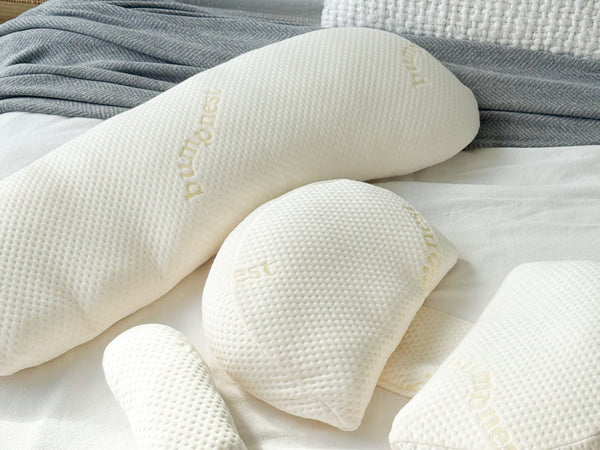
The Bumpnest Maternity Pillow is Australia's only three-piece adjustable maternity pillow system with an organic cotton cover. The organic cotton breathes significantly better than synthetic covers, which matters for pregnant women who sleep hot. Each of the three components is independently positioned to address the specific mechanism of back pain rather than approximating support from one large shape. There is a 50-night trial — long enough to know whether it is making a real difference to your pain before you commit.
See the Bumpnest Maternity Pillow →
How to position a pregnancy pillow for back pain
Correct positioning makes the difference between a pregnancy pillow that relieves back pain and one that doesn't.
Step 1: Position the bump support. Lie on your side in your natural sleeping position. Place the bump wedge or support underneath your bump from below, angling it to lift rather than press. You should feel an immediate reduction in the downward pull on your lower back. If you feel pushed rather than lifted, reposition the wedge so it is further underneath the bump.
Step 2: Position the knee support. Place a firm pillow or knee component between your knees. The gap between your knees should roughly match your standing hip width. If the pillow is too thin and your knees are still close together, find something firmer. Your hips should feel stacked directly above each other rather than twisted.
Step 3: Position the back support. Place the back wedge or support against your lower back, in the curve of the lumbar spine. It should be in contact with your back rather than sitting a few centimetres away. Lean into it slightly rather than sitting away from it.
Step 4: Check your alignment. Your spine should feel relatively neutral — not twisted, not sagging. If you still feel significant lower back tension after positioning all three supports, try adjusting the bump wedge position first as this is usually the highest-impact adjustment.
Additional strategies for pregnancy back pain at night
A pregnancy pillow for back pain works best as part of a broader approach rather than in isolation.
Log-roll technique when changing position. Every time you roll from one side to the other during the night, keeping your shoulders, hips, and knees moving as one unit prevents the asymmetric pelvic loading that spikes back pain during position changes. Engaging your pelvic floor gently before rolling, bringing your knees together, and rotating as one unit reduces overnight pain significantly for most women.
Gentle stretching before bed. Hip flexor stretches and cat-cow movements done in the ten minutes before bed reduce the muscular tension that accumulates through the day and that makes back pain worse when you first lie down. Read our [pregnancy stretches for back and hip pain guide] for a complete routine.
Mattress assessment. A mattress that is too soft allows your hip to sink, creating pelvic misalignment that no pillow system fully corrects. If your mattress is very soft and back pain is persistent despite good pillow positioning, a medium-firm mattress topper is worth considering before assuming the pillow solution is the only variable.
Daytime posture. How you sit, stand, and move during the day affects how much muscular tension you bring to bed. Sitting with good lumbar support, avoiding prolonged standing in one position, and wearing supportive footwear reduces the accumulated back tension that is worst at night.
When pregnancy back pain needs physiotherapy rather than a pillow
A pregnancy pillow for back pain is appropriate for the generalised lower back tension and discomfort that affects most pregnant women from the second trimester. It is not a substitute for physiotherapy assessment when back pain is severe, when it significantly affects daily function beyond sleep, or when it involves specific features that suggest a more complex presentation.
Ask your GP or midwife for a referral to a women's health physiotherapist if back pain is severe enough to limit walking, if you have pain in your pubic bone as well as your lower back, if the pain radiates down one or both legs, or if the pain is not responding to positional changes and basic management strategies. These features may indicate pelvic girdle pain, sciatica, or sacroiliac dysfunction that requires specific assessment and targeted treatment beyond what a pillow can address.
Frequently asked questions
 Sleep
Sleep
What is a Maternity Pillow? Everything You Need to Know
Never heard of a maternity pillow before pregnancy? You're not alone. Here's a clear, honest guid...
Read article → Sleep
Sleep
How to Use a Pregnancy Pillow
A pregnancy pillow only works if it's positioned correctly. Here's exactly how to set one up for ...
Read article →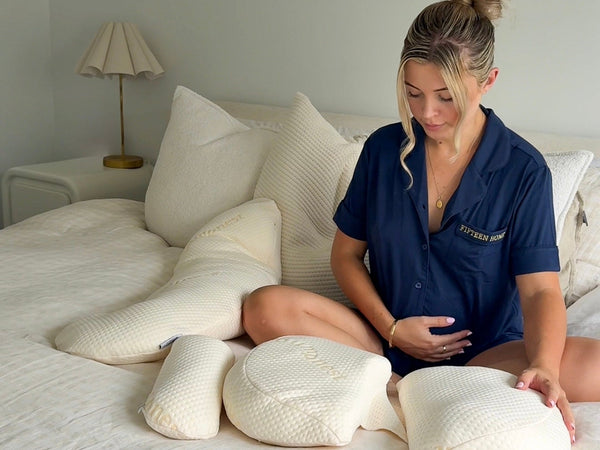 Sleep
Sleep
Pregnancy Insomnia: Why It Happens and What to Do
Lying awake at 2am is one of the most common pregnancy experiences nobody warns you about. Here's...
Read article →