
Maternity Pillow vs Body Pillow: What's the Difference?
A regular body pillow is cheaper and easier to find. A maternity pillow is designed for a specific problem. Here's what actually separates them and when the difference matters.

Walk into any homewares store and you'll find long body pillows for $30 to $50. Walk into a baby retailer and you'll find maternity pillows for $80 to $160. They look similar at first glance: both are long, both go in the bed, both claim to help you sleep better. So what are you actually paying for, and does the difference matter?
The short answer is that a body pillow and a maternity pillow solve overlapping but distinct problems. Which one is right for you depends on where you are in your pregnancy, what kind of discomfort you're experiencing, and how much of the bed you're willing to dedicate to the cause.
What a body pillow is designed to do
A body pillow is a long, straight or slightly curved pillow, typically 130 to 150 centimetres, designed for general comfort and support while side sleeping. It's used by people of all kinds, not just pregnant women, and its primary purpose is to give your top arm and leg something to rest against so you're not lying on your side with your limbs unsupported.
For early pregnancy, roughly the first and into the early second trimester, a body pillow can work reasonably well. Your bump is small, your sleep position changes are minor, and what you mainly need is something to hold onto while you adjust to side sleeping. A body pillow handles that adequately.
The limitations become more apparent as pregnancy progresses. A straight body pillow supports the front of your body but doesn't address what's behind you, under your bump, or between your knees in a way that's properly calibrated to pregnancy anatomy. It also tends to shift during the night. The longer the pillow, the more surface area there is to move. And it takes up a significant portion of the bed.
What a maternity pillow is designed to do differently
A maternity pillow is built around the specific postural and anatomical demands of pregnancy, rather than general side-sleeping comfort. The key differences come down to three things: targeted zone support, bump accommodation, and positional stability.
Zone support. Pregnancy discomfort doesn't come from one place. Hip and pelvic pain comes from your top hip dropping forward without support. Lower back tension comes from the weight of your bump pulling downward. Reflux and breathing discomfort can come from lying completely flat. A maternity pillow, depending on its design, addresses multiple zones simultaneously rather than providing generalised cushioning along one axis.
Bump accommodation. A standard body pillow sits alongside your body but doesn't account for the specific shape and weight distribution of a pregnant bump. From around 20 to 24 weeks, the bump needs lift from below to reduce the downward pull on your lower back. A body pillow pressed against the front of your body doesn't provide this. A wedge positioned underneath your bump does.
Positional stability. One of the most common complaints with both body pillows and regular pillow stacks is that they shift when you roll. The pillow that was between your knees at midnight is on the floor by 2am. Purpose-designed maternity pillows, particularly modular systems, are shaped and positioned to stay in place more reliably through movement.
The different types of maternity pillow
It's worth knowing that "maternity pillow" covers a wide range of designs with meaningfully different trade-offs.
U-shaped full body pillows wrap around both sides of your body. They provide comprehensive support and are popular with women who sleep cold or want to feel fully enclosed. The downsides are significant though: they're bulky, hot, and in a standard queen or double bed they leave very little room for a partner. They also don't allow easy repositioning without moving the entire pillow.
C-shaped body pillows are a slightly more compact version of the U-shape, supporting the front and partially the back. They address the partner space problem to some degree but still tend to be large and are difficult to adjust once you're settled.
Wedge pillows are the most minimal option: a small triangular wedge designed to sit under the bump or behind the lower back. They're inexpensive, take up almost no space, and are highly targeted. The limitation is that they address one zone at a time. A wedge under your bump doesn't help your knees. A wedge behind your back doesn't support your bump. For early pregnancy or mild discomfort, a wedge is often enough.
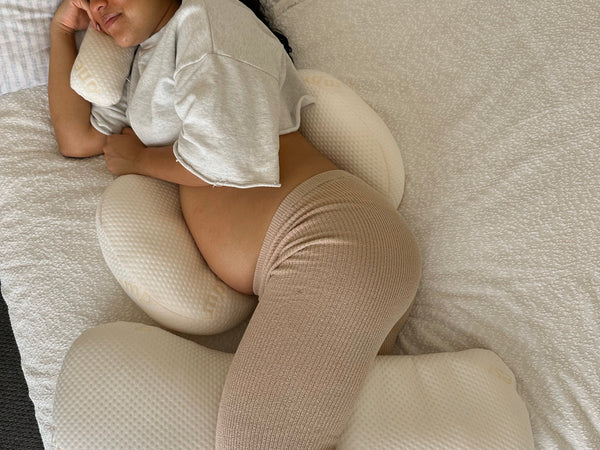
Modular systems (3-piece adjustable) are a newer design approach that treats each support zone separately. Rather than one large pillow that approximates support across your whole body, a modular system uses smaller components, typically a front wedge, a back wedge, and a knee component, that are positioned independently. This allows more precise targeting of the areas that actually hurt, takes up less of the bed than a full-body pillow, and maintains support better when you roll because each piece is positioned exactly where it needs to be rather than draped across your body.
When a body pillow is genuinely enough
Being honest about this matters. A body pillow is adequate, and possibly preferable, in a few specific situations.
In the first trimester and early second trimester, when your bump is small and your main adjustment is getting used to side sleeping, a body pillow is a cost-effective starting point. If you later find you need more targeted support, you can add a wedge or upgrade.
If you sleep hot, a large maternity pillow will make this worse. A simple body pillow or even a rolled blanket gives you something to rest against without the heat retention of a larger pillow.
If you're a very still sleeper who doesn't move much overnight, pillow shifting is less of an issue and a body pillow may stay in place well enough to be useful.
When to invest in a dedicated maternity pillow
The case for a purpose-designed maternity pillow becomes much stronger once specific pregnancy discomforts begin, particularly hip and pelvic pain, lower back tension, and the challenge of maintaining a side-sleeping position that your body isn't naturally comfortable in.
If you're waking multiple times overnight to reposition, if hip pain is disrupting your sleep, or if you're heading into the third trimester and sleep quality is genuinely affecting your daily function, a maternity pillow designed around those specific problems will outperform a body pillow meaningfully.
The Bumpnest Maternity Pillow is a modular system designed around exactly these use cases. Rather than one large pillow, it uses three components that support your bump, lower back, and knees independently. Because each piece is where it needs to be, it stays put when you roll and takes up considerably less bed space than a U-shaped alternative. There's a 50-night trial, so if it doesn't improve your sleep you can return it.
Want to learn more about pregnancy sleeping? Read our How to Sleep on Your Side During Pregnancy article. Or tips to sleeping better during pregnancy.
Frequently asked questions
 Sleep
Sleep
How to Stop Waking Up on Your Back During Pregnancy
Waking up on your back at 3am and panicking is one of the most common third trimester experienc...
Read article →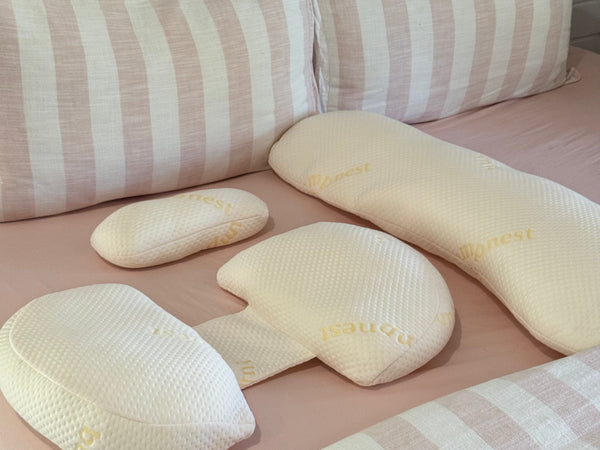 Sleep
Sleep
Is a Pregnancy Pillow Worth It?
Pregnancy pillows range from $50 to $200+ and the marketing around them is not always helpful. He...
Read article → Sleep
Sleep
Best Sleeping Position During Pregnancy: A Complete Guide
The guidance on sleep position during pregnancy is clearer than most people realise. Here's what ...
Read article →