
Is a Pregnancy Pillow Worth It?
The honest answer is: it depends. Here's exactly what a pregnancy pillow does, who it genuinely helps, when you don't need one, and what to look for if you decide to buy.

The question of whether a pregnancy pillow is worth buying is a reasonable one. They range in price from under $50 to over $200. The marketing around them tends toward superlatives. And the category includes products so different in design and purpose that the name "pregnancy pillow" covers almost everything from a small foam wedge to a full-body wrap the size of a single mattress.
The honest answer is that a pregnancy pillow is worth it for most women from the second trimester onwards, not worth it for some women in early pregnancy, and worth considerably more than the sticker price for women in the third trimester dealing with specific physical discomforts.
Here's the full picture.
What a pregnancy pillow actually does
Before evaluating whether something is worth buying, it helps to be clear about what it does and doesn't do.
A pregnancy pillow provides positional support during sleep. That's it. It doesn't treat any condition, doesn't prevent complications, and doesn't do anything that rest and good positioning couldn't achieve some other way. What it does is make good positioning considerably easier to maintain through a full night of sleep than improvising with regular pillows.
The specific mechanism that matters is this: as your pregnancy progresses, side sleeping without support becomes increasingly painful because your bump pulls downward on your lower back, your top hip drops forward and loads your hip joints unevenly, and you have nothing to lean against. The result is hip pain, lower back tension, and frequent overnight waking to reposition. A well-designed pregnancy pillow addresses these three things simultaneously and makes the recommended side-sleeping position comfortable enough to actually maintain.
When a pregnancy pillow is genuinely worth it
From around 18 to 22 weeks onwards for most women. This is when the bump becomes significant enough to affect comfortable side lying and when hip and lower back discomfort start to build. Starting a pregnancy pillow at this stage means your body adapts before discomfort peaks, and you have the support in place before the third trimester when sleep becomes the most disrupted.
If you are waking multiple times overnight from hip or back pain. This is the clearest signal that your current setup isn't working. Hip pain that wakes you within an hour of lying down, the need to reposition multiple times per night, or waking with significant lower back stiffness are all directly addressable with the right support. For women in this situation, a good pregnancy pillow produces noticeable improvement from the first night.
If you have pelvic girdle pain or symphysis pubis dysfunction. These conditions require specific sleep positioning that is very difficult to achieve consistently without purpose-designed support. A pillow thick enough to keep the knees genuinely hip-width apart and stable throughout the night is genuinely therapeutic rather than just comfortable.
If you're a natural back or stomach sleeper adapting to side sleeping. The NSW Health recommendation to settle to sleep on your side from 28 weeks is a significant ask for people who have spent their whole life sleeping in other positions. A pregnancy pillow makes the transition considerably easier by making side sleeping comfortable enough that your body actually wants to stay there.
For the postpartum period. A pregnancy pillow purchased at 20 weeks and used through to birth is also a postpartum recovery tool. The same hip and lower back support that helps during pregnancy continues to be useful during fourth trimester rest and feeding. The value calculation changes substantially when you account for five to six months of use rather than just the last trimester.
When a pregnancy pillow is probably not worth it
In the first trimester. If you're in the first trimester without significant sleep disruption, a pregnancy pillow is not yet necessary. Your bump is small, most sleeping positions are still comfortable, and whatever you're currently doing is working. Save the purchase for when you actually need it.
If you sleep hot. Many pregnancy pillows, particularly large U-shaped and C-shaped designs, retain significant heat. Pregnancy raises your core body temperature, and adding a heat-retaining body pillow to the bed can make an already warm sleep environment worse. If this is likely to be an issue, a smaller modular system or a wedge causes considerably less heat disruption than a large wraparound pillow.
If your sleep is fine. Not every pregnant woman experiences significant sleep disruption. Some women sleep comfortably on their side with minimal setup throughout their pregnancy. If you're sleeping well and waking rested, a pregnancy pillow is not something you need. There is no preventive benefit that justifies the purchase when sleep is already working.
If you're in a very early stage of pregnancy and on a budget. A regular pillow between your knees does the most important job of keeping your hips stacked. In early pregnancy when that's all you need, it's a free solution. A pregnancy pillow earns its place when that single regular pillow stops being adequate.
The price question
Pregnancy pillows in Australia range from around $29 for a basic wedge to $160 for a full-body U-shaped pillow. The right price point depends on what you actually need.
A $50 wedge is appropriate if your main issue is targeted support in one area — under the bump or behind the lower back — and you're in the early to mid second trimester. It's a good entry point.
A $80 to $200 full-body C-shaped or U-shaped pillow provides comprehensive support but comes with trade-offs around heat, bed space, and the fact that it shifts as one unit when you roll. Worth it for some women, not for others.
A $100 to $160 modular system provides targeted support across multiple zones without the heat and bulk of a full-body pillow. Worth it for the third trimester, for women with hip or pelvic pain, and for those who share a bed and need a compact option.
The value calculation also changes when you consider postpartum use. A pillow that costs $114 and is used from 20 weeks of pregnancy through to several months postpartum works out to under $1 per day across that period. That's a different purchase than one used only for the last few weeks of pregnancy.
What makes the difference between a good and a bad pregnancy pillow
The most common reason women decide pregnancy pillows aren't worth it is that they bought one that didn't work well for their specific needs. Three things determine whether a pregnancy pillow actually helps.
Firmness. A pillow that's too soft compresses under your weight within the first hour and stops providing meaningful support. The firmness needs to hold through the night, particularly for the piece between your knees where the goal is to maintain a genuine gap rather than just have something between your legs.
Staying in place. If the pillow shifts significantly when you roll from one side to the other, you're repositioning it multiple times per night, which defeats the purpose. Smaller, independently positioned components tend to stay in place better than a single large pillow that drags across the bed with you.
Covering the right zones. Under the bump, between the knees, and behind the lower back are the three areas that drive most pregnancy sleep discomfort. A pillow that addresses only one or two of them leaves the remaining drivers of pain unaddressed.
The Bumpnest Maternity Pillow is a modular three-piece system designed around all three of these factors. Each component addresses one zone independently, holds its shape through the night, and stays in place when you move. There's a 50-night trial, so if it doesn't make a genuine difference to your sleep you can return it without risk.
See the Bumpnest Maternity Pillow →
The bottom line
For most women from around 20 weeks onwards: yes, a pregnancy pillow is worth it. Not because it's an essential item in the way a pram or a car capsule is, but because sleep quality in the second and third trimesters directly affects how you function, how you recover from the physical demands of pregnancy, and how you arrive at birth. Addressing the specific physical causes of sleep disruption with the right support is a straightforward investment in something that affects almost every other aspect of your pregnancy experience.
For women in early pregnancy without sleep disruption: not yet. Save the purchase for when you need it.
For women in the third trimester already losing significant sleep to hip or pelvic pain: the question isn't really whether it's worth it. It's which one to buy.
Frequently asked questions
 Sleep
Sleep
Pregnancy Pillow for Hip Pain: A Buyer's Guide
Waking up every hour with hip pain is one of the most disruptive pregnancy sleep experiences. The...
Read article →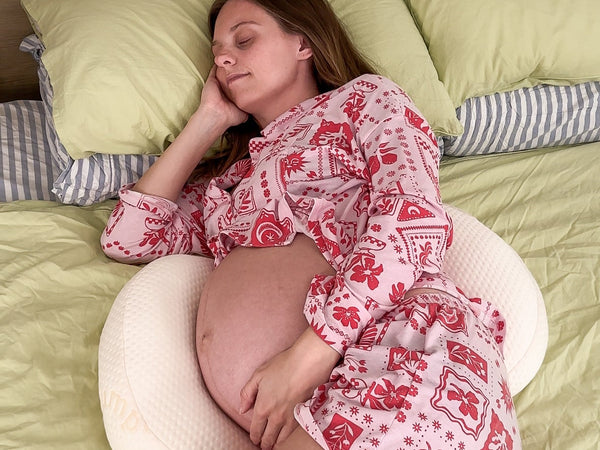 Sleep
Sleep
Compact Pregnancy Pillow: Why Smaller is Often Better
A full-body pregnancy pillow takes up half the bed, retains heat, and shifts when you roll. A com...
Read article →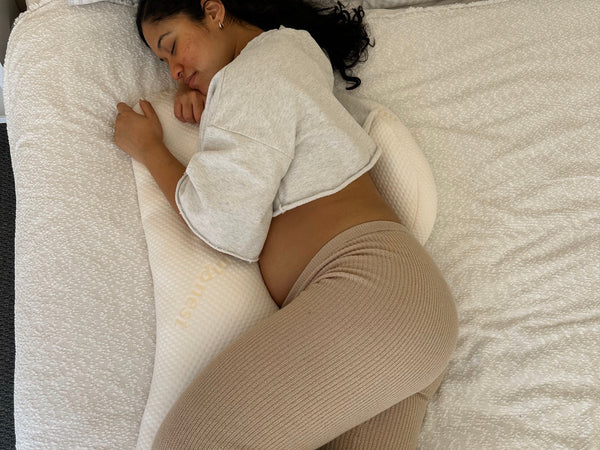 Sleep
Sleep
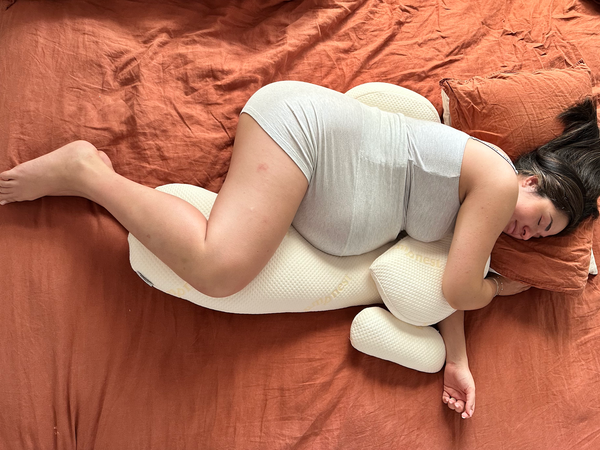
Pregnancy Pillow for Back Pain: What Actually Works
Pregnancy back pain at night is one of the most common sleep disruptors from the second trimester...
Read article →