
How to Sleep on Your Side During Pregnancy (And What to Do If You Wake Up on Your Back)
NSW Health guidance is clear: sleep on your side from 28 weeks. But nobody tells you what to do when you keep waking up on your back at 2am. Here's the full picture.

"I keep waking up on my back at 2am and I panic every single time."
If that's you, this post is for you. You're not alone, and you're not doing anything wrong. Side sleeping during pregnancy is genuinely important, but the advice most people receive is incomplete. You're told what to do without being told why, how, or what to do when it doesn't go to plan.
This post covers all of it.
Why side sleeping matters from 28 weeks
From around 28 weeks, healthcare guidance in Australia and the UK consistently recommends starting sleep on your side rather than your back. This is based on research suggesting that going to sleep on your back in the third trimester is associated with a small but measurable increased risk of stillbirth.
The key phrase there is "going to sleep." The concern is about the position you fall asleep in, not the position you wake up in.
Left or right side? Either is fine. You may have heard that the left side is better for circulation, and while there is some evidence for this, the guidance from organisations including Tommy's and the Lullaby Trust is that either side is acceptable. Don't stress about which side. Just pick the one that's comfortable.
Why so many people struggle to actually do it
Knowing you should sleep on your side and being able to sleep on your side comfortably are two different things.
Here's what gets in the way:
- You're a natural back sleeper. If you've slept on your back your whole life, side sleeping can feel foreign. Your body knows how to relax in one position, and being told to lie differently doesn't automatically make it comfortable.
- Hip pain kicks in. When you lie on your side without adequate support, your top hip drops forward, pulling on your lower back and putting uneven pressure on your hips. This is incredibly common from the second trimester onwards and gets worse as your bump grows.
- The bump creates pressure. Without support underneath, the weight of your growing bump pulls down when you lie on your side, creating tension across your lower back and hips.
- Reflux. Many pregnant women experience heartburn that lying flat makes worse. Sleeping slightly propped can help, but that can conflict with side lying positions.
None of this means side sleeping isn't possible. It means you need a bit of setup to make it work.
How to actually make side sleeping comfortable
The goal is to keep your spine neutral, your hips stacked, and your bump supported. Here's how to build that:
- Pillow between your knees. This is the single most effective adjustment you can make. A pillow between your knees stops your top hip from rolling forward, which reduces the hip and pelvic pain that makes side sleeping hard to maintain. It needs to be thick enough to keep your knees roughly hip-width apart.
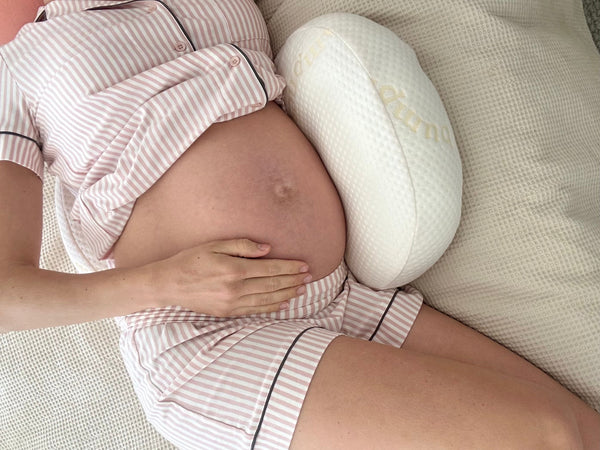
- Support under your bump. As your bump grows, a wedge or small pillow tucked underneath provides lift that prevents that downward pull. Even in the second trimester, this makes a noticeable difference.
- Something behind your back. Placing a pillow or wedge behind your lower back does two things: it gives you something to lean against slightly, which is more comfortable than lying unsupported in open air, and it discourages you from rolling onto your back without feeling trapped.
- A slightly elevated head position. If reflux is an issue, try raising the head of your bed a few centimetres or sleeping on an extra pillow. This uses gravity to keep stomach acid down without affecting your side-lying position.
The challenge with this setup using regular pillows is that they shift during the night. You roll, the pillow moves, the alignment is gone, and you're awake at 3am rearranging bedding.
What to do if you wake up on your back
Take a breath. Then roll back onto your side.
That's it.
NSW Health's guidance is clear on this: if you wake up on your back, don't panic. Simply roll back onto your side and go back to sleep. Simply roll back onto your side and go back to sleep. Your body will generally alert you if blood flow is significantly restricted. The research concern is about falling asleep on your back repeatedly, not about accidentally rolling there during the night.
Anxiety about this is completely understandable. Sleep anxiety in pregnancy is real and common. But waking up on your back once (or every night) is not a reason to lie awake in fear. Acknowledge it, roll over, and rest.
If you find you're consistently waking on your back and this is distressing you, speak with your midwife. They can reassure you based on your specific pregnancy and help you figure out whether additional support would help.
When a proper support system makes a difference
For some people, a bit of repositioning is enough. For others, especially from the third trimester or with hip and pelvic pain, a more structured system makes side sleeping genuinely sustainable rather than a nightly battle.
The Bumpnest Maternity Pillow is designed specifically around this. Rather than one large body pillow, it uses a modular system that supports three zones separately: under the bump, between the knees, and behind the lower back. Because each component is positioned where you actually need it, it stays put better than a single pillow and takes up less of the bed.
It's not a medical device and it won't prevent you from rolling. What it does is make the recommended position comfortable enough that your body actually wants to stay there.
If you're already in pain, already losing sleep, or heading into the third trimester and want to get ahead of it, it's worth a look. There's a 50-night trial so you can test it properly.
Frequently asked questions
 Sleep
Sleep
Third Trimester Sleep Survival Guide
Third trimester sleep is one of the most consistently underestimated challenges of pregnancy. Her...
Read article →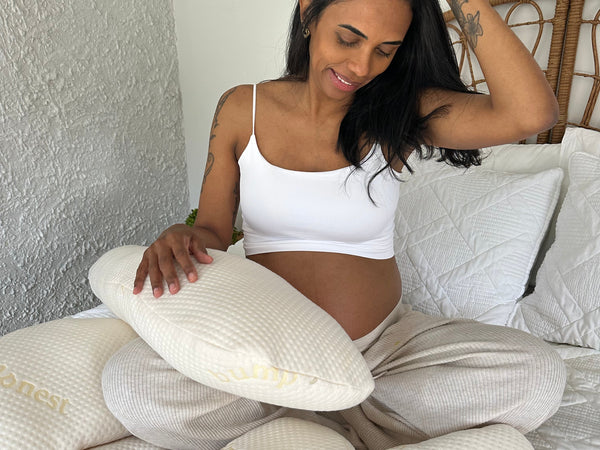 Sleep
Sleep
Can You Still Use a Maternity Pillow After Birth? (Yes — Here's How)
You bought it for pregnancy. But a good maternity pillow has a second life postpartum — for recov...
Read article →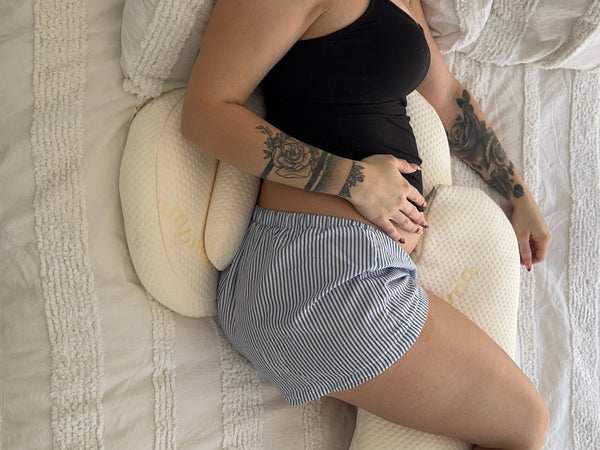 Sleep
Sleep
Sleeping with Pelvic Girdle Pain During Pregnancy: A Practical Guide
If you've been told to keep your knees together when you roll and not much else, this post goes c...
Read article →