
Five Tips to Sleeping Better During Pregnancy
Between a growing bump, frequent bathroom trips, and a busy mind, good sleep can feel out of reach. Here's what actually helps.

Sleep during pregnancy is one of those things that sounds like it should be simple — you're exhausted, your body is working hard, rest should follow. But ask anyone past 20 weeks and they'll tell you a different story.
A growing bump limits your positions. Frequent bathroom trips interrupt your deepest sleep cycles. Heartburn flares at night. Your mind races. And from 28 weeks, adjusting to a new sleep position adds another layer of effort to something that used to be automatic.
None of this means good sleep is out of reach. These five changes are practical, evidence-based, and make a measurable difference when applied consistently.
1. Sort out your sleep position
From 28 weeks, NSW Health recommends settling to sleep on your side. Either left or right is fine — the guidance is about avoiding your back, not about which side you choose. If you wake up on your back during the night, simply roll back onto your side and go back to sleep. The concern is the position you fall asleep in, not where you drift to mid-night.
The challenge is that side sleeping without support becomes uncomfortable quickly. When you lie on your side without anything under your bump, the weight pulls downward and creates tension across your lower back. Without support between your knees, your top hip drops forward and puts uneven pressure on your hips and pelvis. This is why so many women find themselves waking every hour to reposition.
A pillow between your knees, a wedge under your bump, and something behind your lower back to discourage rolling covers the three zones that matter most. The Bumpnest Maternity Pillow is built around this — a modular system that supports each zone separately so it stays in place when you move rather than shifting out of position the first time you roll.
2. Build a wind-down routine and stick to it
Pregnancy brings a particular kind of mental load — appointments, preparation, anxiety, excitement — that doesn't automatically switch off when you get into bed. A consistent pre-sleep routine signals to your nervous system that it's time to shift down, and over time it becomes genuinely effective.
What works varies by person, but a warm shower or bath in the hour before bed is one of the most reliably useful tools. The drop in body temperature after getting out triggers drowsiness. Gentle stretching or prenatal yoga helps release the physical tension that builds through the day. Reducing screen time in the last 30 to 60 minutes removes a source of stimulation that delays sleep onset for most people.
The consistency matters as much as the activities. A routine done at the same time each night becomes a cue your body recognises.
3. Time your fluids and manage heartburn
Two of the most common causes of broken sleep in pregnancy — frequent urination and heartburn — are both manageable with some simple adjustments.
For bathroom trips: front-load your fluid intake earlier in the day and taper off in the two hours before bed. You still need to stay well hydrated overall, but the timing makes a real difference to how often you're waking overnight. Going to the toilet as part of your wind-down routine, right before you get into bed, also helps.
For heartburn: eat your evening meal earlier where possible and keep it lighter than your midday meal. Fatty, spicy, and acidic foods worsen reflux at night. Lying down within an hour of eating gives your stomach less time to empty before you're horizontal. Slightly elevating the head of your bed — even just a couple of centimetres — uses gravity to keep stomach acid down and is one of the more underrated sleep improvements for the third trimester.
4. Move during the day
Regular gentle movement improves sleep quality in pregnancy in several ways. It reduces the muscle tension and joint stiffness that make lying still uncomfortable. It helps regulate mood and anxiety, which are significant contributors to difficulty falling asleep. And it supports the physical tiredness that makes sleep feel earned rather than elusive.
You don't need to do anything strenuous. A 30-minute walk, a prenatal yoga session, or a swim is enough. The main caveat is timing — vigorous exercise within two hours of bedtime raises your core temperature and heart rate in ways that delay sleep onset for most people. Morning or early afternoon works better.
5. Treat your sleep environment as seriously as your sleep routine
This one gets overlooked because it feels obvious, but pregnancy raises your core body temperature and makes you more sensitive to heat, noise, and discomfort than usual.
Keep your bedroom cool — around 18 to 20 degrees is the range most people sleep best in, and erring on the cooler side is particularly helpful during pregnancy. Blackout curtains or a sleep mask help if light is an issue. If you're sharing a bed and your partner's movement is waking you, a body pillow behind your back creates a gentle buffer without requiring separate beds.
The combination of a cool room, a dark space, a consistent wind-down routine, and a comfortable sleep position covers the majority of what drives poor sleep during pregnancy. It won't eliminate every wake-up — some are unavoidable — but it shifts the baseline significantly.
Frequently asked questions
 Sleep
Sleep
Can You Still Use a Maternity Pillow After Birth? (Yes — Here's How)
You bought it for pregnancy. But a good maternity pillow has a second life postpartum — for recov...
Read article → Sleep
Sleep
Sleeping with Pelvic Girdle Pain During Pregnancy: A Practical Guide
If you've been told to keep your knees together when you roll and not much else, this post goes c...
Read article →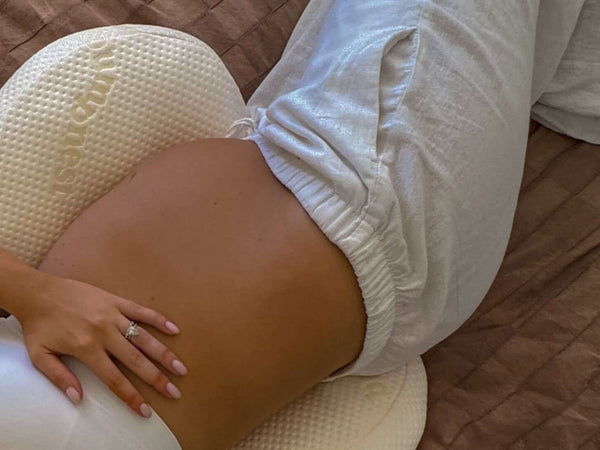 Sleep
Sleep
When Should I Start Using a Pregnancy Pillow? (Earlier Than Most People Think)
You don't need to wait until sleep becomes unbearable to start using a pregnancy pillow. Starting...
Read article →