
C-Section Recovery: What to Expect and How to Prepare
A caesarean section is major abdominal surgery. Here's what recovery actually looks like in the days, weeks, and months that follow and how to prepare for it before birth.

Around one in three babies born in Australia arrive by caesarean section — making it one of the most common surgical procedures performed in this country. Yet most people know considerably less about recovering from a caesarean than they do about recovering from a vaginal birth.
Part of this is the framing. A caesarean is often discussed as something that happens to a birth plan rather than as a major abdominal surgery with a significant and specific recovery process. The reality is that a caesarean involves cutting through seven layers of tissue — skin, fat, fascia, two layers of abdominal muscle, peritoneum, and uterus — and that recovering from this takes time, rest, and the right management regardless of whether the surgery was planned or unplanned.
This post covers what recovery actually looks like across the first hours, days, weeks, and months after a caesarean and how to prepare practically if you know you're having one.
Immediately after surgery: the first hours
A caesarean is typically performed under regional anaesthesia — a spinal block or epidural — which means you are awake during the procedure and awake when your baby is born. General anaesthesia is used in some emergency situations.
In the immediate hours after surgery, the anaesthesia wears off gradually from the feet upward. Most women begin to feel sensation return to their legs within two to four hours. The transition from numbness to normal sensation can involve tingling, itching, and pins and needles — all normal and temporary.
Pain management begins in the operating theatre and continues in the recovery room and postnatal ward. Your care team will prescribe a combination of pain relief appropriate for your situation, which typically includes regular paracetamol and anti-inflammatory medication alongside stronger pain relief as needed. Taking pain relief as prescribed rather than waiting until pain becomes severe makes a significant difference to recovery comfort and mobility.
Skin-to-skin contact with your baby in the operating theatre is possible during and after an uncomplicated caesarean, and most Australian hospitals actively facilitate this. If you have a preference for skin-to-skin in theatre, include it in your birth preferences document and discuss it with your care team at your antenatal appointments.
A urinary catheter is inserted before surgery and typically remains in place for twelve to twenty-four hours. Its removal is one of the milestones before you're encouraged to mobilise.
The first days: hospital recovery
Most women spend three to five days in hospital following a caesarean. These first days involve a careful balance of rest and increasing mobility — complete immobility increases the risk of blood clots, but overdoing movement before the wound has begun to heal increases pain and slows recovery.
Getting up and moving. You will be encouraged to stand and take your first steps within twelve to twenty-four hours of surgery. This first mobilisation is often one of the most surprising experiences of caesarean recovery — the combination of post-surgical pain, core weakness, and the shock of upright gravity after lying flat makes the first stand feel significant. Having someone with you for the first few times is important.
Moving from lying to sitting and sitting to standing requires technique rather than muscle effort. Rolling onto your side and pushing yourself up with your arms — the log-roll technique — protects the incision and reduces pain considerably compared to attempting to sit straight up from lying flat.
Wound care. The incision is typically covered with a dressing for the first day or two. Your care team will advise on dressing changes and when the wound can be exposed to air. Keeping the wound clean and dry is the primary requirement in the early days. Loose, low-cut clothing and underwear that doesn't sit on the incision site — or disposable underwear — is more comfortable than anything that crosses the wound line.
Wind and bowel function. Abdominal surgery affects gut motility, and wind pain is one of the more unexpected and uncomfortable aspects of the first days after a caesarean. Moving around gently, avoiding carbonated drinks, and using prescribed stool softeners as directed all help. Your first bowel movement after a caesarean may take two to three days and may require reassurance that it is safe to push gently — it is.
Blood clot prevention. Compression stockings are typically worn in hospital and sometimes for several weeks after discharge. Blood-thinning injections are prescribed for some women based on their individual clot risk. Staying mobile and hydrated are the most important ongoing measures.
The first two weeks at home
Discharge from hospital following a caesarean typically occurs at two to four days, earlier for uncomplicated recoveries and later if complications arise. The transition home is often when the reality of recovery sets in — hospital support disappears and the demands of a newborn begin in earnest.
What you can and cannot do. The standard Australian guidance for the first two weeks following a caesarean is to avoid lifting anything heavier than your baby, avoid driving, avoid stairs more than necessary, and rest as much as a newborn allows. These restrictions exist because the internal healing of the uterus and abdominal fascia — the layer that holds everything together — takes considerably longer than the visible wound. The skin may look healed within two weeks. The deeper tissues are not.
Lifting restrictions are not arbitrary caution. Lifting before the fascia has adequately healed increases the risk of wound dehiscence and hernia. When you do need to lift, brace your abdominal muscles gently before and during the movement, and keep the load close to your body.
Pain management at home. Most women need regular paracetamol and ibuprofen for the first one to two weeks at home, taken together on a schedule rather than as needed. This is more effective than waiting for pain to build before medicating. Ibuprofen is safe while breastfeeding at standard doses. Ask your GP or pharmacist if you are unsure about any medication while breastfeeding.
The wound. The incision typically sits just above the pubic hairline and is around ten to fifteen centimetres long. In the first two weeks it may feel tight, numb, itchy, or tender. Some women experience a sensation of pulling or tugging near the wound with movement — this is the internal healing process and is normal. Signs that warrant prompt medical attention include increasing redness spreading from the incision, warmth, discharge that smells unpleasant, the edges of the wound separating, or a fever above 38 degrees.
Rest and sleep positioning. Getting comfortable in bed in the early postpartum weeks is harder after a caesarean than many women anticipate. Your core is not functional, rolling in bed is painful, and getting up for night feeds involves the same log-roll technique dozens of times across the night. Positioning yourself with support behind your lower back and something to brace against when rolling reduces the effort and pain of each position change. A pillow held against your abdomen when coughing, sneezing, or laughing provides useful support and is a technique your care team will likely recommend.
The same hip and lower back support that helped during pregnancy continues to be useful in the early postpartum weeks during rest and overnight. The Bumpnest Maternity Pillow components work just as well postpartum for supporting your position during the long overnight feeds and recovery rest periods that caesarean recovery requires.
Weeks two to six: rebuilding
The period between two and six weeks is when most women begin to feel more like themselves while simultaneously doing too much too soon because they feel better than they did. This is one of the most common recovery mistakes after a caesarean.
Driving. The standard recommendation in Australia is six weeks before returning to driving after a caesarean. This is not a legal requirement but a safety guideline based on the time required for reflexes, reaction time, and emergency braking ability to return to pre-surgical levels while managing post-surgical pain. Always check with your GP before returning to driving and confirm with your insurer regarding any conditions on your policy.
Exercise. Walking is appropriate from the first days and should be gradually increased. Other exercise should not be resumed until cleared by a women's health physiotherapist at your six-week check, and return to running, weights, and higher-impact exercise typically takes considerably longer — twelve weeks minimum for most women with uncomplicated recoveries, and often longer.
Starting too soon with exercise, particularly anything that loads the abdominal muscles before they have healed, increases the risk of hernia, prolapse, and ongoing abdominal weakness. The six-week GP check does not assess your core and pelvic floor adequately for return to exercise. A postnatal physiotherapy appointment provides a much more specific evaluation.
Scar management. From around six weeks, once the wound is fully closed, scar massage can help reduce adhesions — areas where the internal scar tissue attaches to surrounding structures and causes pulling or tightness. A women's health physiotherapist can teach you scar massage technique and assess whether you have adhesions affecting movement or posture.
Emotional recovery
The emotional experience of caesarean recovery varies enormously between women and between planned and unplanned caesareans. Some women feel entirely at peace with their caesarean. Others feel grief, guilt, or a sense of loss related to the birth they planned for and didn't have. Both responses are valid and neither is more appropriate than the other.
Unplanned or emergency caesareans in particular can involve elements of shock, fear, and loss of control that warrant acknowledgement rather than dismissal. If your caesarean was unexpected and you are finding it difficult to process, speaking with your GP, midwife, or a perinatal psychologist is a useful step. Birth trauma is real, it is common, and it responds well to the right support.
Postnatal depression and anxiety affect around one in five Australian mothers regardless of birth type. Caesarean birth does not protect against PND and may increase the risk in some women due to the additional physical recovery demands and the way they affect sleep, mobility, and early bonding. PANDA is available on 1300 726 306.
Preparing for a planned caesarean
If you know you are having a caesarean, there are practical steps you can take before birth that make recovery significantly easier.
Arrange substantial help for the first two weeks at home. The lifting restriction and driving restriction mean you cannot safely manage a newborn and household independently. This is not optional caution — it is a genuine physical limitation that requires genuine support.
Set up a recovery space at home before birth. A comfortable place to rest that is close to where your baby sleeps, with everything you need within arm's reach — water, snacks, phone charger, nappies, feeding supplies — reduces the number of times you need to get up and move in the early days.
Stock the freezer with meals. Cooking is not realistic in the first two weeks of caesarean recovery and relying on others to bring food is less reliable than having it already there.
Have loose, comfortable clothing ready, with nothing that sits at the waist. Low-rise or high-rise options that avoid the incision line entirely are most comfortable. Many women find that high-waisted recovery shorts from around week two provide useful compression and support for the healing wound.
Frequently asked questions
 Nutrition
Pregnancy Supplements: What You Actually Need in Australia
Walk into any Australian chemist and the pregnancy supplement section is enormous. Not all of it ...
Read article → Nutrition
Eating Well in the First Trimester When Nothing Sounds Good
In an ideal world, the first trimester would be when you eat the most carefully. In reality, it's...
Read article →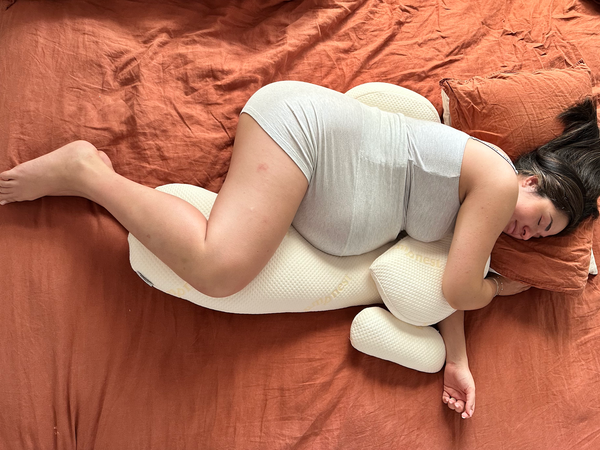 Sleep
SleepPregnancy Pillow for Hip Pain: A Buyer's Guide
Waking up every hour with hip pain is one of the most disruptive pregnancy sleep experiences. The...
Read article →